It's an annoying phenomenon that even owners of high-quality cutlery sets know: After washing, small, brownish spots suddenly appear on knife blades or fork tines. This so-called flash rust often doesn't even originate on the cutlery itself, but travels from rusting screws on pots, pans, or damaged plastic coatings of dishwasher baskets through the hot water. Anyone who now laboriously starts scrubbing with polish or special cleaners invests a lot of time in a problem that can be solved much more elegantly physically.
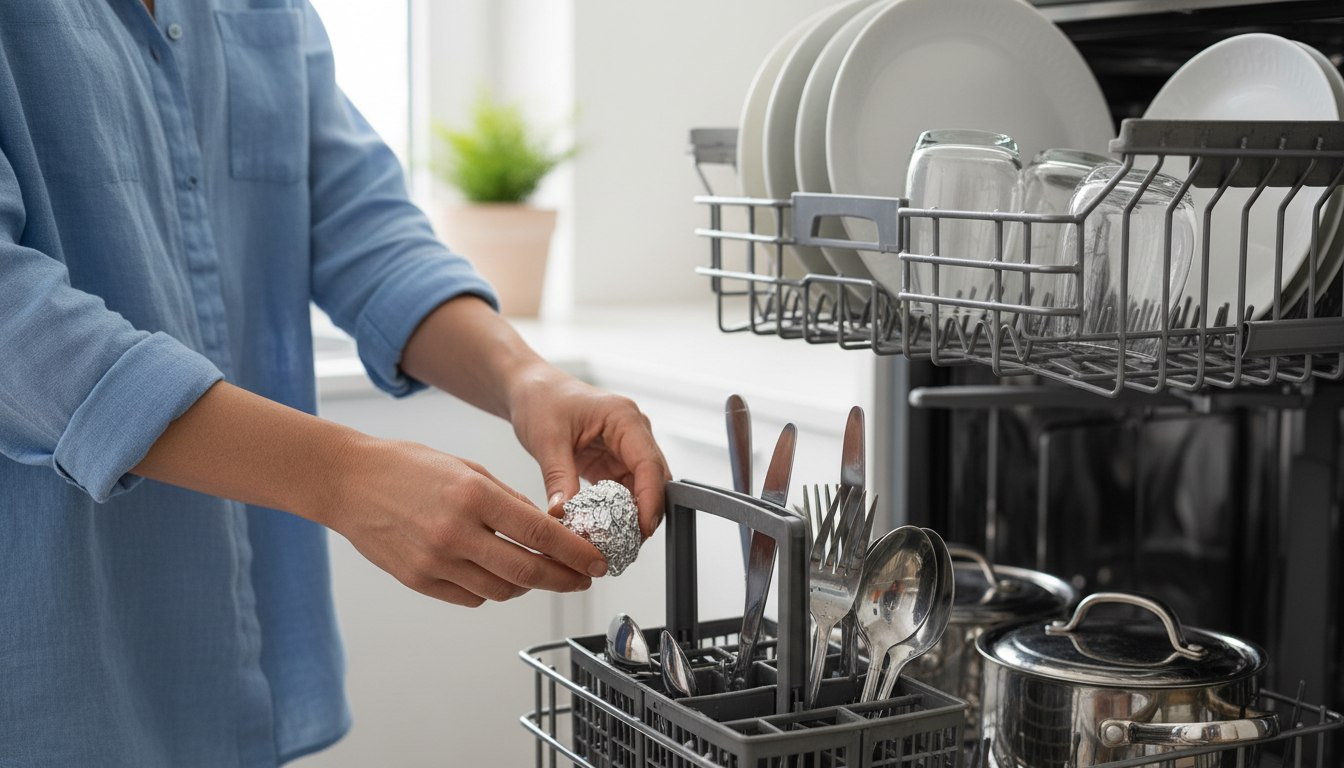
The surprisingly simple secret weapon against the brown spots is usually already in the kitchen drawer: ordinary aluminum foil. A loosely crumpled ball, about the size of a walnut, is simply placed in the cutlery basket or in a corner of the cutlery compartment. The logic behind it is as simple as it is effective. Aluminum is a "less noble" metal than the stainless steel of the cutlery. In the aggressive, hot-humid environment of the dishwasher, the foil acts like a so-called sacrificial anode. A chemical process ensures that the rust floating in the water does not adhere to the cutlery, but is literally attracted to the aluminum foil and bound there.
The result is cutlery that comes out of the machine immaculately shiny without additional chemicals or manual re-polishing. You don't have to replace the aluminum ball every time; only when it is visibly dark and oxidized has it served its purpose and can be replaced. It is a small, almost free gesture that makes everyday life easier and ensures that knives and forks look like new for years, without ever having to resort to aggressive abrasives again.
Why a small ball of aluminum foil works wonders in the dishwasher
It's an annoying phenomenon that even owners of high-quality cutlery sets know: After washing, small, brownish spots suddenly appear on knife blades or fork tines. This…